
This article contains affiliate links. We may earn a commission at no extra cost to you if you make a purchase through our links.
7 Best Backpacks for College Commuters and Campus Life in 2026
The right backpack does more than carry your books—it shapes your entire college experience. Whether you’re walking across campus three times a day or commuting from home, the wrong pack leaves you with shoulder pain and dead laptop batteries. The right one becomes invisible, staying organized so you can focus on classes and campus life.
We tested seven backpacks specifically designed for the demands of college: frequent movement between buildings, laptop protection, daily commutes, and the odd trip home on weekends. We prioritized durability, weather resistance, organization, comfort, and value. Each pack below handles the essentials differently, so we’ve highlighted which students will actually want each one.
Peak Design Everyday Backpack 30L
The Everyday Backpack 30L strikes the rare balance between modular organization and streamlined simplicity. It opens like a clamshell, meaning you don’t have to dump the entire pack to find your notes. The weatherproof exterior handles rain without becoming a swimming pool, and the laptop compartment fits up to 16-inch machines without requiring you to wedge anything in sideways.
The modular expansion system lets you use pouches that attach via Capture clip (Peak Design’s proprietary system), so you’re not paying for organization you won’t use. Cable routing and cable anchors mean your headphone cords stay put instead of becoming a tangled mess at the bottom. Students with high organizational needs will appreciate the dedicated pockets for everything from keys to water bottles.
The downside: at $200, it’s the most expensive pack on this list, and the modular system means you’re often buying additional pouches to unlock its full potential. It’s also designed more for intentional organization than chaotic college living—it doesn’t forgive stuffing.
- Clamshell opening saves 2+ minutes daily finding items
- Weatherproof fabric means one less thing to worry about in Memphis rain
- Modular Capture system adds flexibility without bulk
- Laptop compartment fits 16-inch machines with breathing room
- Lifetime warranty covers manufacturing defects
- Premium price ($200) puts it out of reach for budget-conscious students
- Modular accessories cost extra and fragment the ecosystem
Verdict: Buy this if you want the pack to work harder than you do, with organization that scales from one class to a weekend trip.
Osprey Talon 26

Osprey’s Talon 26 is built for people who move constantly. The 26-liter capacity is smaller than competing packs, which forces you to be intentional about what you carry—meaning lighter days and better back strain. The harness system actually fits bodies that aren’t built like linebackers; Osprey designed this specifically for smaller frames and women, not as an afterthought.
The pack uses a trampoline-style back panel that keeps weight off your spine, and the hip belt transfers load to your hips where it belongs. For daily commutes, this matters. The ventilation channels prevent your back from becoming a sweat puddle during walks between buildings. Osprey includes a rain cover that actually stays attached (through a tether, not a loose piece you’ll lose), and the pack compresses down when it’s half-full so it doesn’t look ridiculous carrying just a laptop and notebook.
The 26-liter size is the real limitation here. You can’t pack weekend gear without planning meticulously. The price ($135) is fair but not cheap, and you’re paying for design optimization—if you just need a bag to hold stuff, you can spend less elsewhere.
- Lightweight frame transfers weight to hips instead of shoulders
- Smaller capacity forces intentional packing and reduces back strain
- Rain cover included and actually tethered to prevent loss
- Back panel ventilation prevents sweat accumulation
- Compression straps keep partial loads from looking sloppy
- 26 liters isn’t enough for a full course load plus weekend gear
- Better suited to minimalists than students who carry everything
Verdict: Buy this if you commute daily, value comfort over capacity, and don’t mind editing what you carry.
The North Face Recon
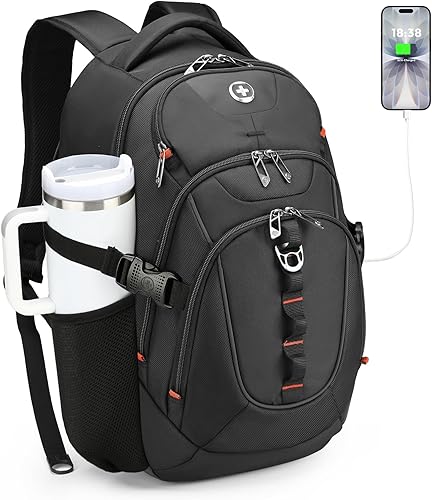
The North Face Recon is the Swiss Army knife of college backpacks—32 liters of straightforward durability with zero fuss. It uses Cordura fabric that genuinely resists abrasion, so it’ll survive being stuffed into lockers, thrown into car trunks, and dragged across concrete steps. The weather resistance is real, not marketing language; the sealed seams actually work when you’re caught in a downpour.
Organization happens with a traditional compartment system: front pocket, main compartment, laptop sleeve. Nothing fancy, nothing you have to learn. The shoulder straps are padded enough that you can wear it for hours without pain, and the hip belt, while minimal, helps. At $100, it’s the most affordable option in this roundup that doesn’t sacrifice durability.
The lack of sophistication is both the appeal and the drawback. You won’t find cable routing or dedicated organizational pockets. If you need everything labeled and accessible, the Recon feels basic. The padding is functional but not luxurious, and students carrying heavy textbooks might notice shoulder strain during longer commutes.
- Cordura material resists scuffs and tears from daily abuse
- Sealed seams actually protect against rain, not just resist it
- $100 price point is unbeatable for this durability level
- 32-liter capacity handles full course loads and weekend gear
- Weight distribution works for daily 20-minute commutes without pain
- Minimal organization requires accepting a less-structured interior
- Shoulder padding is adequate, not premium—heavier loads start feeling heavy
Verdict: Buy this if you want a durable pack that doesn’t break the bank and won’t quit after one semester.
Herschel Little America
The Little America succeeds because it looks like a regular backpack instead of a hiking pack. That matters for students concerned with aesthetics—it works for campus, the library, and casual hangouts without screaming “outdoor gear.” The 25-liter size is modest, but the pack is light enough that it disappears on your shoulders. Herschel uses recycled polyester, which is a genuine environmental benefit if you care about that.
The pack’s real strength is simplicity. You get a main compartment, a front pocket, a padded laptop sleeve, and an internal organization pocket. That’s it. The minimalism makes it easy to pack and unpack quickly between classes. The shape is compact enough that it fits under airplane seats (important for the commuting student), and the look is trendy without being trendy-tomorrow.
Herschel’s weakness is durability under heavy use. The fabric isn’t as tough as technical packs, and while it handles normal wear fine, aggressive college students might scuff or tear it within a year. The $60-70 price point is accessible, but you’re trading longevity for aesthetics. The padding is thin, so heavy loads (full textbooks, laptops, plus supplies) will start to hurt after 20+ minutes of walking.
- Looks like fashion instead of outdoor gear—works for campus and casual settings
- Recycled polyester fabric reduces environmental impact
- Compact size fits under airplane seats and between dorm room furniture
- $60-70 price makes it accessible for freshman budgets
- Lightweight design won’t tire shoulders during short commutes
- Fabric durability is lower than technical packs—likely needs replacement after heavy use
- Minimal padding makes heavier loads uncomfortable for longer distances
Verdict: Buy this if looks matter, your commute is short, and you’re okay replacing it sooner than technical alternatives.
Topo Designs Daypack

The Topo Designs Daypack occupies the middle ground between fashion and function. It uses ballistic nylon that’s genuinely tough—this material was originally used for briefcases and suitcases—combined with a design language that doesn’t scream “technical gear.” The 20-liter capacity is reasonable for classes and short commutes, and the pack weighs nearly nothing, so even fully loaded it feels light.
The interior is organized without being complicated: a main compartment, a front pocket with internal organization, and a laptop sleeve that fits 13-inch machines snugly. The shoulder straps use webbing instead of foam, which means better load transfer but less cushioning. For students who value clean aesthetic and proven durability, this is the answer.
The 20-liter capacity becomes limiting if you’re carrying a full course load. The laptop sleeve is sized for 13-inch machines, so 15 or 16-inch laptops require careful fitting. At $129, it’s mid-range pricing without the organizational bells and whistles of more expensive packs. The webbing straps are comfortable but not padded, so heavy loads (think textbooks plus laptop) will become noticeable after extended wearing.
- Ballistic nylon is genuinely durable and will outlast most college careers
- Clean design works for campus, class, and professional settings
- Lightweight construction means less shoulder fatigue on short commutes
- Well-designed laptop sleeve protects machines effectively
- Made in the USA, supporting domestic manufacturing
- 20-liter capacity doesn’t accommodate heavy textbook loads or weekend trips
- Webbing straps lack cushioning—heavier gear becomes noticeable quickly
Verdict: Buy this if you want durability and style without technical complexity, and your loads are light to moderate.
Deuter Speed Lite 21

Deuter is a German company that makes packs for people who hike mountains, so their college pack is overbuilt in the best way. The Speed Lite 21 uses Cordura fabric, a suspension system designed to distribute weight precisely, and construction that treats each seam like it matters. At 400 grams (less than a pound), it’s one of the lightest packs on this list, but it carries heavy loads without flex or failure.
The design is efficient: a front pocket, a main compartment, a side water bottle pocket, and that’s mostly it. Deuter assumes you’ll pack intentionally instead of stuffing. The sternum strap actually reduces shoulder strain by distributing load across your chest, and the hip belt, while minimal, works. For students walking 30+ minutes daily or commuting with laptops and textbooks, this pack earns its price through reduced strain and increased longevity.
Deuter’s efficiency means it skips organizational features. There’s no separate laptop sleeve; your laptop goes in the main compartment with a protective pad. For students who want labeled pockets and cable routing, this feels basic. The 21-liter capacity is modest, requiring disciplined packing. At $140, it’s expensive for its size, but you’re paying for weight savings and engineering.
- Ultralight at 400 grams—noticeable difference during daily commutes
- Suspension system distributes weight precisely, reducing shoulder pain
- Sternum strap actually reduces load on shoulders, not just a marketing feature
- Cordura construction resists damage from daily abuse
- German engineering means each component earns its inclusion
- No dedicated laptop sleeve—requires protective padding in main compartment
- 21-liter capacity requires intentional packing, limiting what you can carry
Verdict: Buy this if you value lightweight comfort above all else and will pack strategically to maximize capacity.
Patagonia Black Hole Pack 32L

The Patagonia Black Hole represents the maximum durability extreme. The pack uses Patagonia’s proprietary Bluesign-certified nylon that’s treated to resist damage, and the construction uses bar-tacking at stress points instead of relying solely on stitching. This pack will survive anything from being dragged behind a car to becoming a permanent fixture in a college locker. Patagonia backs it with a lifetime warranty and repairs almost anything for reasonable cost.
The 32-liter capacity handles full course loads and weekend gear. The padded laptop sleeve fits 15-inch machines, the hip belt is substantial enough to matter, and the organization is functional without being excessive. Weather resistance is genuine—sealed seams, weatherproof zippers, and treated fabric mean this pack shrugs off rain. For students planning to keep the same backpack through college and beyond, the lifetime durability argument is compelling.
Patagonia’s premium pricing ($200) means this is expensive upfront, and you won’t see its value until year three when every other pack has failed. The styling is utilitarian—this is clearly an outdoor brand’s pack, not something masquerading as fashion. The weight is substantial compared to lighter options, which matters during longer commutes. You’re paying for longevity and repair support, not for features you don’t use.
- Bluesign-certified nylon resists damage from daily abuse and weather
- Lifetime warranty and repair program means decades of use
- 32-liter capacity handles full course loads plus weekend gear
- Bar-tacked stress points won’t fail even under heavy use
- Sealed seams and treated zippers provide genuine weatherproofing
- $200 price point requires viewing this as a multi-year investment
- Substantial weight (600+ grams) makes longer commutes more tiring
Verdict: Buy this if you plan to use the same pack through college and into your career, and want genuine lifetime durability.
Conclusion
The best backpack depends on what you value: the Peak Design prioritizes organization, the Osprey prioritizes comfort for frequent movement, the North Face prioritizes durability at low cost, and the Patagonia prioritizes longevity. For most college students, the North Face Recon or Osprey Talon represent the best tradeoff between cost, comfort, and durability. If you’re carrying heavy textbooks daily, the Deuter Speed Lite’s weight savings will matter. If you want the pack to essentially disappear, the Herschel works for lighter loads and shorter commutes. Whatever you choose, spending $100-150 on a quality pack now will save you pain, frustration, and money compared to replacing cheaper packs every year.